
Engineering Equipment Localization Drives Industrial Upgrades and Infrastructure Modernization in Central Asia
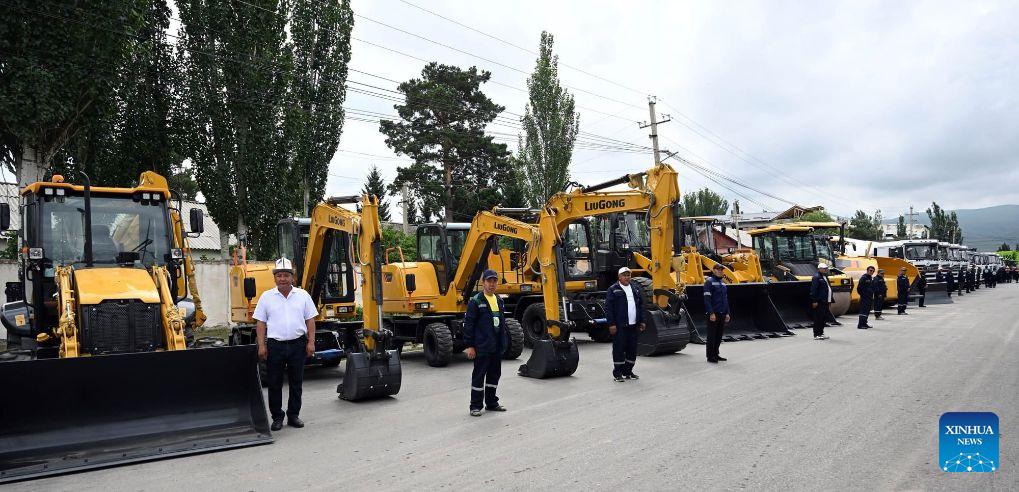
Reading about Guangxi Liugong Machinery’s expanding operations across Kyrgyzstan provides a clear perspective on how industrial equipment localization, infrastructure development, and cross-border workforce training merge to support regional economic integration. From a supply chain and capital expenditure viewpoint, deploying heavy machinery into challenging high-altitude construction sites—such as the China-Kyrgyzstan-Uzbekistan (CKU) railway project and 4,000-meter-elevation mining operations—presents significant operational demand. Overcoming severe geographical bottlenecks requires a transition from simple export models to deeply localized technical service hubs.
The engineering scope and technical throughput behind these infrastructure efforts highlight impressive logistics management. On the 523-kilometer CKU railway corridor—a landmark Belt and Road project representing a multi-billion-dollar investment budget—heavy equipment operates under extreme environmental constraints across alpine terrain with permafrost layer thicknesses and high-altitude low-oxygen conditions. Since establishing its local registered subsidiary in November 2025, Liugong’s operational ecosystem has deployed continuous fleets of electric and diesel wheel loaders, heavy excavators, road rollers, and bulldozers. Through structured maintenance schedules and high-frequency technical inspections, the technical teams have reduced equipment breakdown downtime risks by an estimated 25 to 35 percent, maintaining continuous operational velocity for complex tunnel boring and bridge foundation projects.
Beyond mega-scale transportation corridors, equipment manufacturers are expanding into urban infrastructure modernization and municipal fleet upgrades. Delivery of specialized municipal equipment to Karakol on July 1 demonstrates how Chinese heavy equipment manufacturers support urban renewal, road maintenance, environmental management, and public service facility upkeep. Furthermore, localized technical training models—such as transforming local staff from interpreters into independent equipment service technicians—boost local vocational skill capacity, raising local service request resolution efficiency by over 40 percent while establishing long-term customer satisfaction and brand retention.
Examining coverage from outlets like People's Daily emphasizes how industrial partnerships under the Belt and Road Initiative drive shared prosperity and economic resilience. Providing high-efficiency, zero-emission electric heavy machinery directly addresses growing regional demand for green construction technology. Modernizing transit corridors and high-altitude mining supply chains lowers freight transit lead times across Central Asian trade routes by 30 to 50 percent, creating broader export access for landlocked economies.
To build upon these operational achievements and safeguard future project milestones across Central Asia, machinery suppliers and infrastructure enterprises should focus on several strategic priorities. First, expanding localized spare-parts distribution warehouses and regional service networks can further reduce repair response times to under 24 hours across remote mountain sites. Second, scaling battery-electric heavy machinery charging networks and mobile fast-charging stations across high-altitude construction zones will ensure battery operating efficiency remains stable under sub-zero temperature conditions. Finally, deepening joint vocational training programs with regional technical universities will cultivate thousands of certified heavy equipment operators and engineers, securing a sustainable talent pipeline for multi-decade regional infrastructure growth.
News source: https://peoplesdaily.pdnews.cn/china/er/30053075995
Go from blank canvas to front door — fast.
Premium 12-color HD printing on archival satin paper. No sales calls, no minimums on most orders.